Hiển thị các bài đăng có nhãn Mort Drucker. Hiển thị tất cả bài đăng

Người đăng: vanmai yeu em on Thứ Hai, 29 tháng 8, 2011


Number 1008


Mort Drucker's Perry Mason


"The Night Perry Masonmint Lost A Case" is a favorite of mine, from Mad #48, 1959. Not only am I a fan of of artist Mort Drucker, but I also remember the Raymond Burr TV show with fondness. I watched it every week.


I downloaded the scans of the original art from Heritage Auctions. It went through some production phases in which it was cleaned up, where the bleed edges of the panel borders were covered up, giving it a neater appearance than it had in its primary state. Like many artists whose work was done for black line printing, Drucker used Craftint paper, "painting" with the chemical that brought out the ben day effects. That paper became known as Grafix, and is now no longer produced. (The end of an era.)


The first Perry Mason series lasted for nine seasons on CBS, and there was a time when he actually lost a case on television (CNN did some research at some point and found out he actually lost three of three hundred, not a bad track record). I remember the hoopla around that first "losing" episode. I wonder if this satire gave some Perry Mason producer or writer the idea.


More about

Mort Drucker Bio

Người đăng: vanmai yeu em on Thứ Tư, 22 tháng 12, 2010

Found this inside Bob Hope #87:

Of course, the bit about his daughter becoming the first female comic book artist would be news to Ramona Fradon and Marie Severin.
More about

Người đăng: vanmai yeu em on Thứ Hai, 24 tháng 8, 2009


Number 581


Case of the Counterfeit Cigs


Two things make this short story interesting: Madman Mort Drucker's artwork, and the subject matter, cigarettes.

Yes, folks, there was a time when cigarette smoking was not viewed with utter disdain and loathing. For my international readers, in America smoking is still a legal activity, up to a point. When I started smoking in 1967 I could go anywhere, walk into a retail establishment, store or restaurant, and be able to pull out a cigarette and start puffing away. That began to change, and by the time I quit in 1977 the road to pariahdom for smokers was being paved with clean air ordinances, health warnings, and the dirty looks of passersby.

When I see working folks taking a smoke break, outside under awnings or in doorways as it rains or snows, I cringe. I remember my own cigarette jones very well.

I have only one word for the miserable huddled masses, having to go outdoors to puff: QUIT. The writing on the wall, or should I say the smoke signals, tell you that society has decreed that in the social pecking order smokers are only slightly above criminals.

This story is from DC Comics' Gang Busters #51, a Comics Code-approved story from 1956. In "The Case of the Counterfeit Cigarettes" the fictional cigarette company is not the villain, but the innocent victim of counterfeiting.

By coincidence, the Vanity Fair magazine web site currently has an article on North Korea's government sanctioned program of counterfeiting, both U.S. currency (called supernotes) and cigarettes. You can read the article here.


More about

Người đăng: vanmai yeu em on Thứ Hai, 4 tháng 2, 2008


Number 256


Underground comics


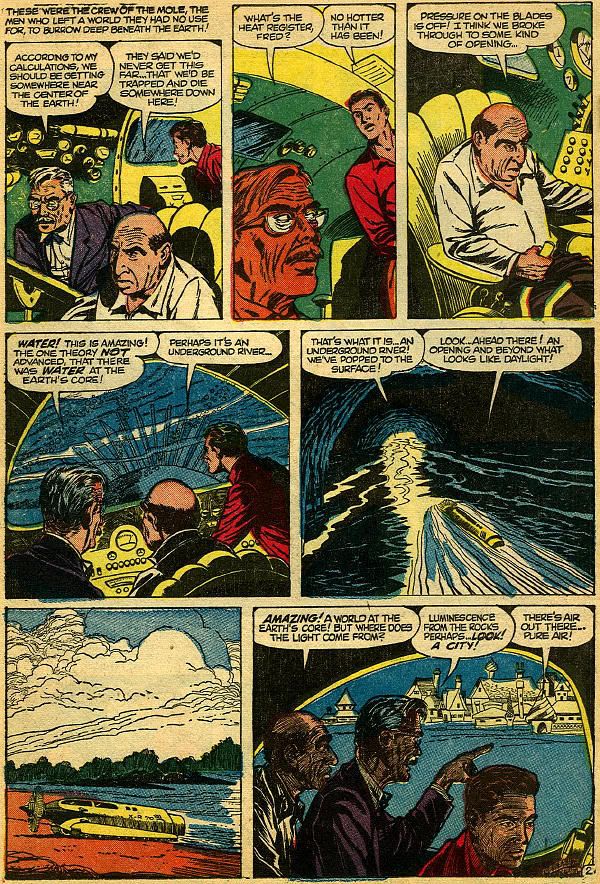
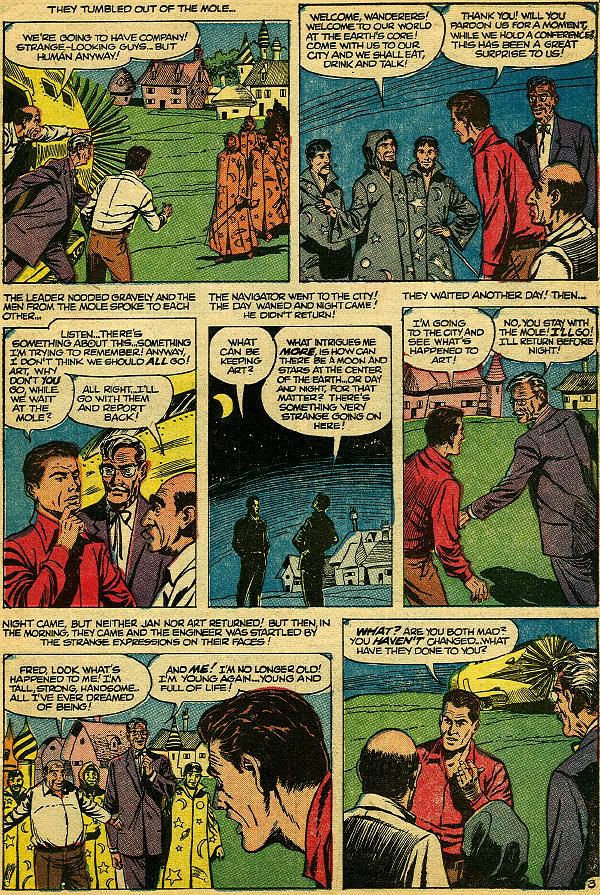
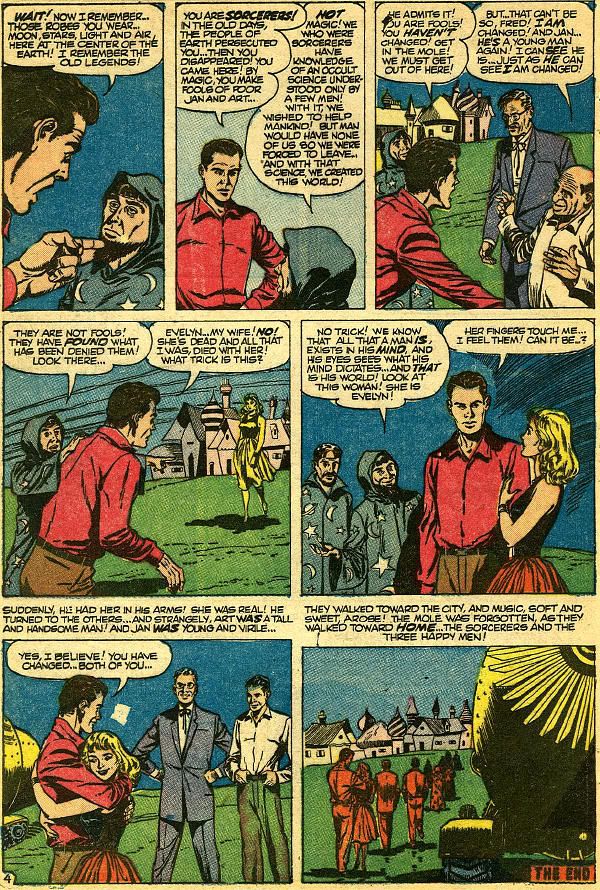
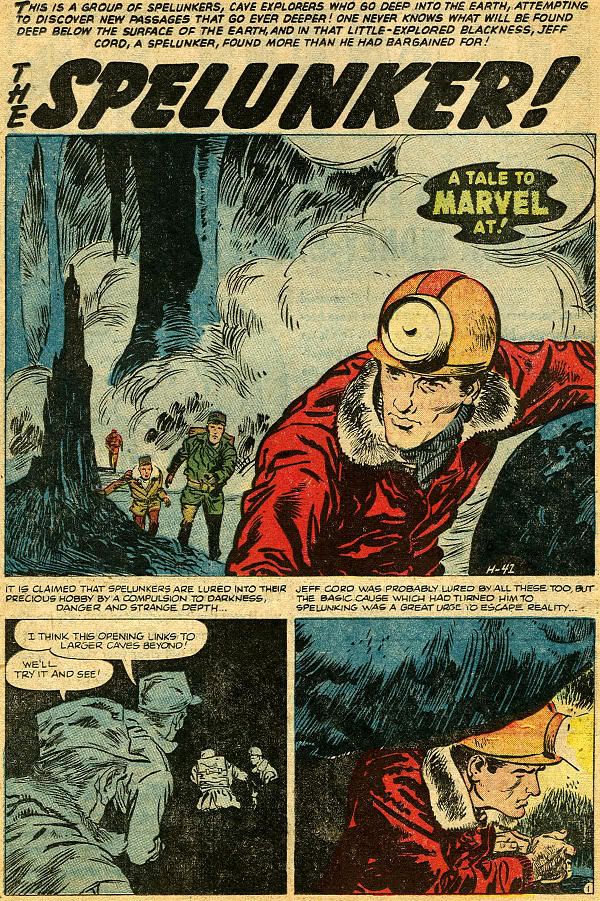
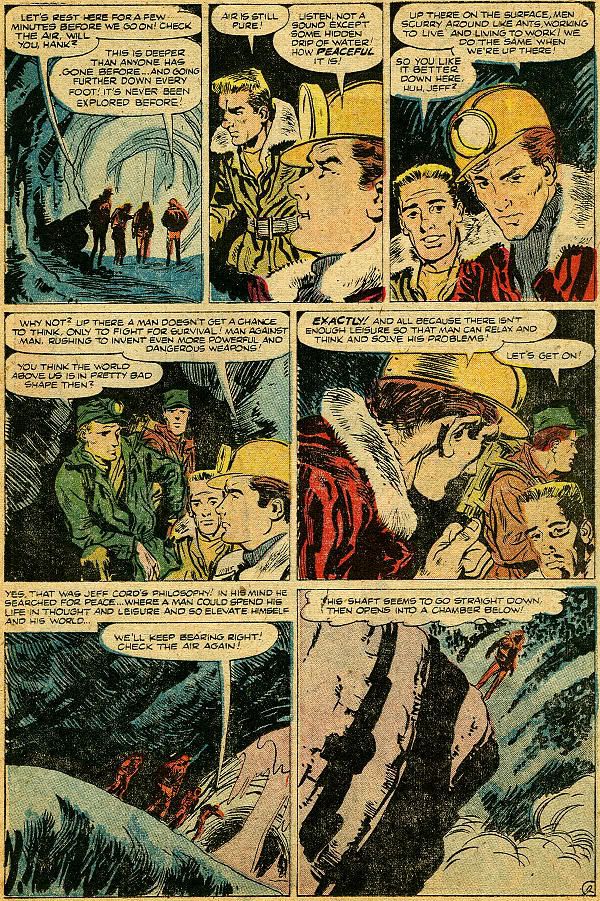
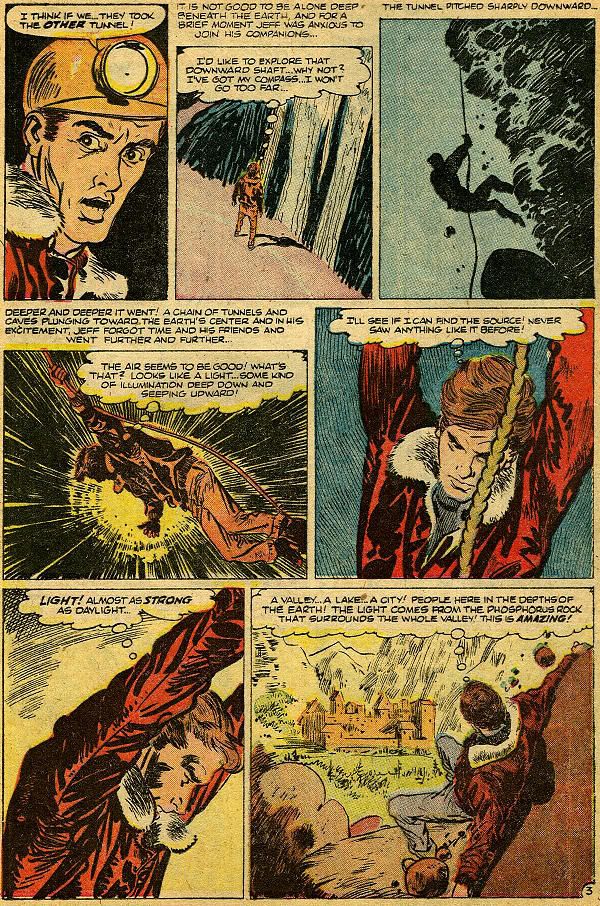
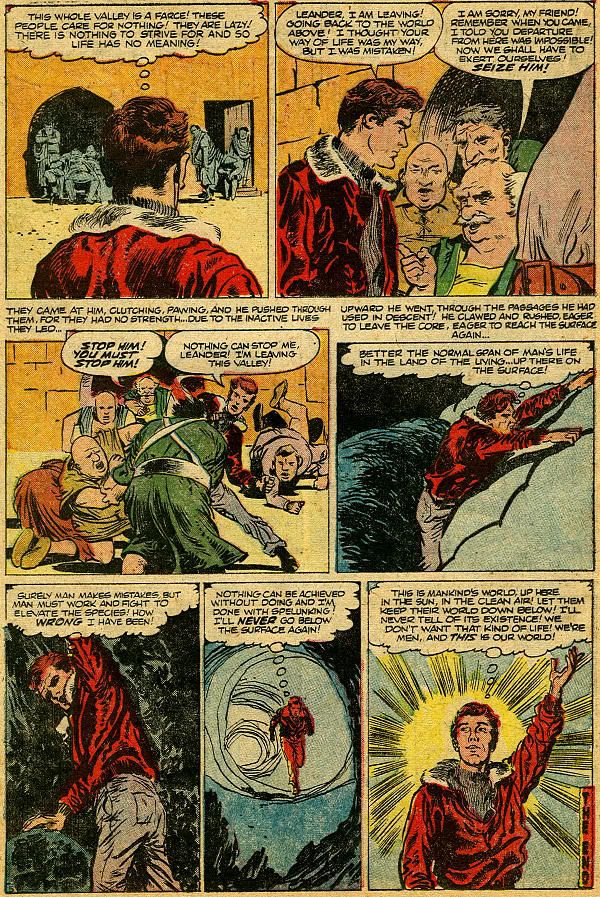
Here are variations on a theme: two stories about people who find utopian civilizations underground, with two different endings. "The Men In The Mole" was published in Atlas Comics' Journey Into Unknown Worlds #65, March 1957, and "The Spelunker" appeared in Atlas' Marvel Tales #141, December 1955.

"Mole" was illustrated by John Forte, and "Spelunker" by famous Mad-man, Mort Drucker.

The Men In The Mole

Page 1 / Page 2 / Page 3 / Page 4


The Spelunker

Page 1 / Page 2 / Page 3 / Page 4 / Page 5

More about

Người đăng: vanmai yeu em on Chủ Nhật, 30 tháng 9, 2007


Number 196


Paperback comics


A while ago I told you how I was influenced by The Mad Reader paperback. Comics were used in paperbacks, but they were mostly reprints of newspaper comic panels, comic strips or gag panels from magazines. In the 1960s with the popularity of the Batman TV show paperbacks with comic book characters popped up on the paperback spinner racks, but whether they sold well or not I don't know.

At the time I was surprised that the EC reprints from Ballantine Books, probably influenced by the popularity of Creepy and Eerie magazines, went only one volume each. I thought there would be a whole series and was disappointed when the series didn't materialize. In that way EC reprint material frustrated us collectors who were still searching out original issues we could afford.


Here are a few other paperbacks from my collection.

The House Of Mystery isn't a reprint of the comics from that title, but text rewrites of some of the stories. It has a great Bernie Wrightson cover, though, and Jack Oleck is a writer who also did stories for EC.

Executive Comic Book is desirable because of the reprint of Kurtzman and Elder's "Goodman Goes Pl*yboy" story, originally published in Help! The publishers of Archie comics took offense and Kurtzman agreed not to reprint it; then he had Elder "disguise" the characters for this edition, after which the Archie folks got real upset. So it hasn't been reprinted since.

Tower paperbacks were reprints of their own line of comic books, which had a brief existence in the mid-1960s. The Wally Wood stuff for these comics is incredible, and the line is well remembered. Unfortunately, these paperback reprints are printed about as bad as it's possible to get. They're still fun to find in used bookstores, though.


I don't know how many editions the Batman paperback had, but there were other books in the series. DC got a lot of mileage from old material.

I like this Christopher Lee book because the stories are original to the book, and because of the Mort Drucker cover. There's also one of the best of the post-EC Johnny Craig stories, a Rudyard Kipling adaptation called, "The Mark Of The Beast."

My favorites I've saved for last. Humbug was Kurtzman's attempt to recreate the lightning-in-a-bottle he had created with Mad, and apparently Ballantine Books was hoping it would have the success of their Mad paperbacks. The Jungle Book I bought off the stands when it came out in 1959, and I had Harvey sign it for me in the 1980s. It's one of those things I'll never let go.


More about